Understand your memory
A personalized assessment, with clear next steps for you.
Self-guided · Personalized · 7-9 minutes

Users worldwide
Average user rating
What is DocMemo's Free Online Memory Assessment?
DocMemo provides a free, self-guided online memory assessment taking 7–9 minutes. It combines interactive cognitive tasks evaluating memory and attention with a personalized health profile to help you understand your memory and determine the next best step for your brain health.
A short, guided assessment
The assessment combines several elements to better understand your situation.
1. Complete the cognitive tasks
A short set of self-guided cognitive tasks, including memory and attention exercises.
2. Tell us about your experience
Describe what you've noticed about your memory through conversational experience.
3. Complete your profile
Answer few questions about your health, background and other factors that may help put your results into context.
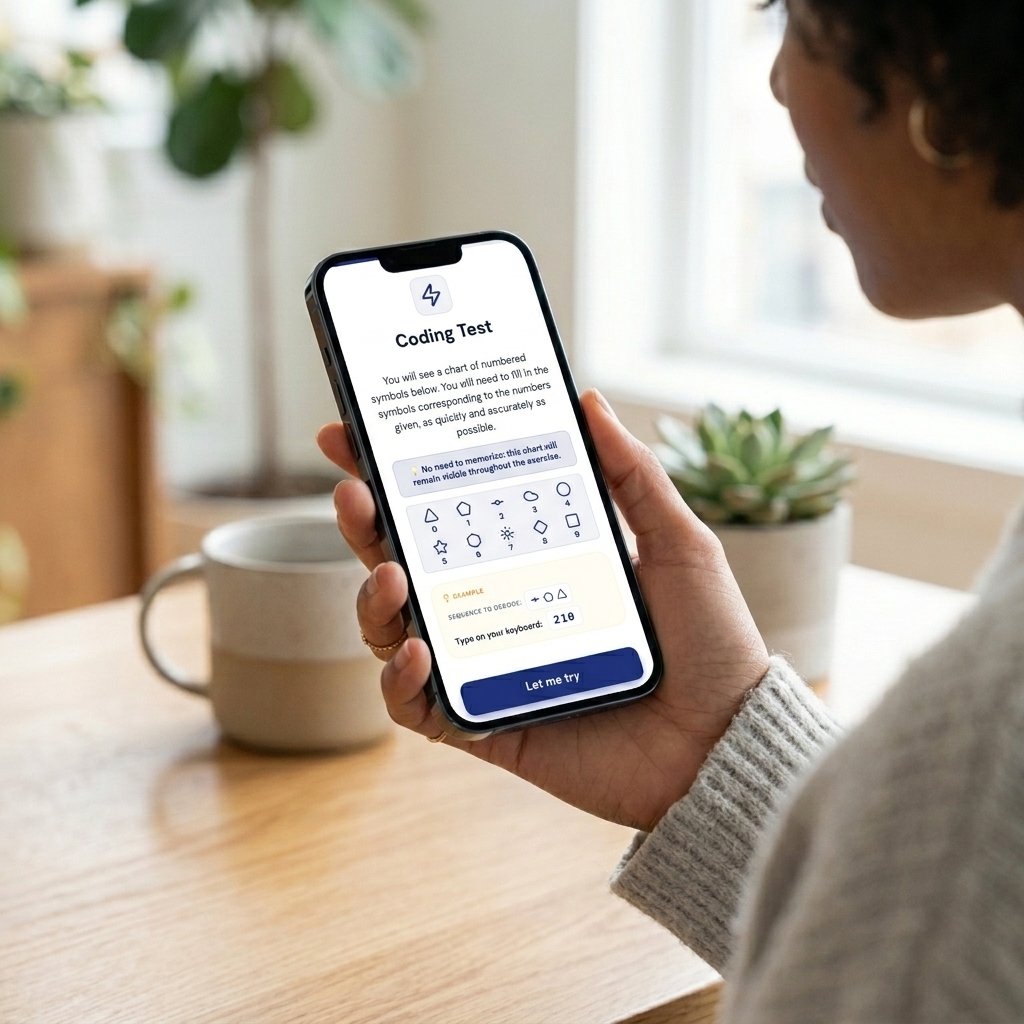
What you will receive:
Your cognitive results
See how you performed on the tasks included in your assessment.
Your personalized profile
Put your results into context with what you've told us about your memory, health and background.
Your next-step recommendation
Get personalized recommendation on what you may want to consider doing next.
Your assessment is a starting point, not an endpoint
Depending on your results and situation, your next step may include:
Continue with a personalized cognitive routine
Build regular practice into your routine.
Consider speaking with a healthcare professional
If your situation suggests that medical advice may be appropriate, we'll let you know.
Explore research opportunities
If relevant, you may have the opportunity to see whether you could match ongoing research studies.
Built on science. Trusted by people. Connected to research.
Built by neuroscientists
DocMemo was founded by neuroscientists with a background at the Paris Brain Institute. Its founder, Stanley Durrleman, led a research team for more than 15 years at the intersection of artificial intelligence and neuroscience and has authored more than 100 scientific publications and several patents. DocMemo is developed in close collaboration with a scientific team including neurologists and neuropsychologists.
Meet the science behind DocMemoConnected to clinical research
DocMemo works with more than 12 research centers around the world, with a growing network of participating sites. More than 1,000 people have been connected with research centers through DocMemo, supporting recruitment for more than 10 clinical studies.
Your privacy matters
Your personal information is never sold to third parties. For research opportunities, contact information is shared with participating research sites only with your authorization and for the purpose of participating in a clinical study.
Frequently Asked Questions About Online Memory Assessment
How does DocMemo's free online memory assessment work?
The assessment takes 7 to 9 minutes and consists of interactive cognitive exercises evaluating memory and attention, combined with questions about your personal experience and health history. You receive immediate results and personalized guidance.
Is the DocMemo memory test a medical diagnosis?
No. DocMemo's assessment is an informational self-assessment designed for wellness tracking and guidance. It does not provide a clinical diagnosis for Alzheimer's disease or dementia. If you have severe or rapidly changing memory concerns, speak with a healthcare professional.
Who developed the DocMemo memory assessment?
DocMemo was founded by Dr. Stanley Durrleman, Research Director at Inria and the Paris Brain Institute (ICM), alongside a team of neuroscientists, neuropsychologists, and AI researchers.
What happens after I complete the assessment?
Based on your cognitive profile, DocMemo recommends your next best action: building a personalized daily cognitive routine, consulting a healthcare professional if appropriate, or exploring potential eligibility for ongoing brain health research studies.
Understand your memory
A personalized assessment, with clear next steps for you.
Assess my memoryDocMemo's assessment is designed to provide information and guidance. It is not a medical diagnosis and does not replace advice from a qualified healthcare professional. If you are concerned about significant or rapidly changing memory problems, speak with a healthcare professional.